Source vintage style cat eye sunglasses for weddings, parties, and daily wear
Compare 30 vintage style cat eye sunglasses from suppliers in Zhejiang and Yiwu. Options include PC and glass lenses with UV protection, available in black, green, and purple frames for round and oval faces.
Key considerations
Products List




Comprehensive Sourcing Guide
Strategic Sourcing Guide for Vintage Style Cat Eye Sunglasses
The global market for vintage-inspired eyewear has experienced a resurgence, driven by a blend of retro aesthetics and modern manufacturing capabilities. For B2B buyers seeking "vintage style cat eye sunglasses," the procurement process requires a nuanced understanding of material science, dimensional standards, and supplier capabilities. This guide synthesizes observed product attributes and industry best practices to provide a disciplined framework for sourcing these specific eyewear items. The focus remains on verifying factual product data, understanding cost structures, and establishing robust quality control protocols without relying on unverified claims or external market speculation.
Understanding Product Attributes and Design Specifications
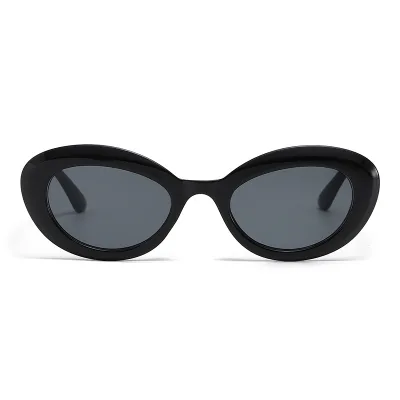
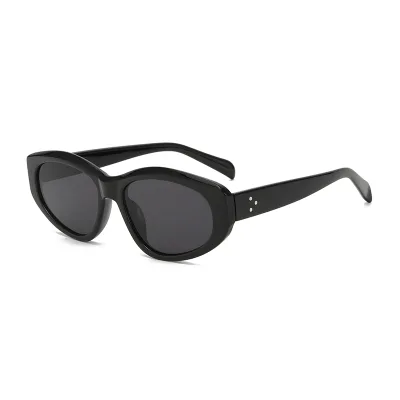
The foundation of successful sourcing lies in accurately defining the product attributes. Based on observed market data, vintage style cat eye sunglasses are characterized by specific frame shapes, lens configurations, and color palettes. The "cat eye" design is a distinct silhouette that typically features an upswept outer edge, often associated with mid-20th-century fashion. In the current supply chain, this style is frequently categorized under "Fashion Sunglasses" or "Vintage Sunglasses," with some listings explicitly noting the design as "Cat Eye."
Material selection is a critical differentiator in this category. The supply base demonstrates a diversity of frame materials, including Alloy and TRL (likely a specific polymer or composite), while lens materials vary significantly between PC (Polycarbonate), Nylon, and Glass. For instance, specific model observations indicate a mix of PC frames with AC lenses, while other listings specify Alloy frames paired with Glass lenses. Buyers must recognize that these material combinations directly influence the product's weight, durability, and optical clarity.
Color options are equally varied, with observed listings offering Frame Colors such as Black, Purple, Green, and Brown. Lens colors also range from Clear to Green and Brown, often paired with specific optical attributes like UV protection. The "Suitable for" attributes further refine the target audience, with products designed for Round Faces, Oval Faces, and specific demographics like Women or Unisex users. Understanding these granular details is essential for matching inventory to specific market segments.
Technical Standards and Dimensional Verification
When sourcing vintage eyewear, technical specifications must be rigorously verified against the physical product. The industry relies on standardized measurement systems to ensure frame fit and lens alignment. Observed data points to specific dimensional standards, such as "54-16-138" and "55-20-145," which typically represent the lens width, bridge width, and temple length in millimeters. Another standard observed is "54-21-147," indicating a variation in bridge width and temple length.
Buyers should not assume that all vintage cat eye models adhere to a single set of dimensions. Instead, procurement teams must verify the "prod_standard" for each specific model number, such as G8068, YHZ3136, G8048, or G8035. These model numbers serve as unique identifiers for the specific tooling and mold used in production. Additionally, packaging standards vary; some products utilize an "Outer Box+Inner Box+Sealed Pocket" configuration, while others are packed in "Carton Box" or "OPP Packing."
The physical dimensions of the product are also critical for logistics. One observed standard lists dimensions as "13.5*13.6CM," which likely refers to the packaging footprint rather than the frame itself. Buyers must distinguish between the product's physical size and its packaging requirements to optimize shipping costs. The "prod_origin" data indicates that many of these items originate from manufacturing hubs in Taizhou, Zhejiang, and Yiwu, Zhejiang, suggesting a concentration of supply in these specific regions.
Cost Drivers and Pricing Dynamics
The pricing structure for vintage style cat eye sunglasses is influenced by a complex interplay of materials, customization options, and order volumes. The observed price range in the market spans from $0.70 to $11.00 USD, a wide variance that reflects differences in material quality and production complexity. Lower-priced items typically utilize PC frames and lenses, which are cost-effective and lightweight. In contrast, higher-priced units may feature Alloy frames and Glass lenses, which offer superior optical clarity and a more premium feel but incur higher manufacturing costs.
Minimum Order Quantity (MOQ) is another significant cost driver. The observed MOQ range extends from 12 units to 1,200 units. Suppliers with lower MOQs, such as those requiring only 20 pieces, may be more accessible for startups or niche brands testing the market. However, these suppliers might have higher per-unit costs due to the lack of economies of scale. Conversely, suppliers with higher MOQs often provide better pricing tiers but require a larger capital commitment.
Customization availability is a key factor in the final cost. The supply data confirms that "Customization" is available for many models. This can include custom branding, color variations, or packaging modifications. While customization adds value, it often increases the lead time and the unit price. Buyers should evaluate whether the brand value gained from customization justifies the additional cost, especially when comparing against standard stock items.
Supplier Evaluation and Capability Assessment
Evaluating suppliers requires a focus on their production capabilities, location, and operational reliability. The data indicates that many suppliers are located in Zhejiang, China, a region known for its robust eyewear manufacturing infrastructure. Specific locations like Taizhou and Yiwu are highlighted as primary origins, suggesting a mature supply chain ecosystem in these areas.
Suppliers often advertise specific capabilities, such as "High Quality Low Price," "Large Stock," and "Fast Shipping." While these are common marketing claims, buyers should verify them through direct communication and sample requests. The presence of a "Factory" attribute in some listings suggests that the supplier may be a direct manufacturer rather than a trading company, which can offer better price control and quality oversight.
The "Condition" of the product is another evaluation metric. Listings frequently state that items are "100% Brand New," which is a baseline expectation for B2B transactions. However, buyers should also look for evidence of quality assurance processes. Features like "High Quality in EU and Au" suggest that some suppliers are targeting markets with strict regulatory requirements, but this should be treated as an observation rather than a guaranteed certification without supporting documentation.
Compliance, Certification, and Regulatory Considerations
Compliance is a critical aspect of sourcing eyewear, particularly for markets in Europe and Australia. While the supplied data mentions certifications such as CE and REACH, and standards like ISO 9001, these are listed as low-confidence background information. Buyers must not assume that a specific product automatically meets these standards based on the keyword association alone.
Instead, procurement teams should treat these certifications as verification targets. For eyewear, the primary regulatory concerns usually revolve around lens safety, UV protection levels, and material safety. The "Lenses Optical Attribute" of "UV" is a common feature, but the specific wavelength range (e.g., UV400) must be confirmed. Buyers should request test reports from suppliers to validate that the lenses provide adequate protection against ultraviolet radiation.
Similarly, material safety is paramount. If a product claims to be suitable for the EU market, it must comply with REACH regulations regarding chemical substances. While the data mentions REACH, it does not confirm that every listed product has passed these tests. Therefore, buyers should include specific compliance clauses in their contracts, requiring suppliers to provide valid test certificates for each batch of goods. The "prod_standard" values observed, such as "54-16-138," are dimensional standards and do not replace regulatory compliance requirements.
Quality Control and Inspection Protocols
Establishing a robust quality control (QC) protocol is essential to mitigate risks associated with sourcing vintage style cat eye sunglasses. Given the variation in materials and the wide price range, a one-size-fits-all inspection approach is insufficient. Buyers should develop a checklist that addresses the specific attributes of each order.
First, visual inspection should verify the frame color, lens color, and overall finish. For example, if the order specifies "Frame Color: Black," the supplier must ensure there are no discolorations or inconsistencies. The "Style of Design" must also be checked to ensure the cat eye shape is accurate and symmetrical.
Second, dimensional verification is crucial. Using calipers, inspectors should measure the lens width, bridge width, and temple length to ensure they match the "prod_standard" provided in the order. Any deviation beyond acceptable tolerances can lead to fit issues and customer returns.
Third, functional testing should be conducted. This includes checking the hinge durability, the clarity of the lenses, and the effectiveness of the UV protection. For products with "Glass" lenses, inspectors should look for scratches or bubbles. For "PC" or "Nylon" lenses, the focus should be on impact resistance and optical distortion.
Finally, packaging inspection is necessary to ensure the product arrives in good condition. The "prod_packing" method, whether it is "Carton Box," "OPP Packing," or "Outer Box+Inner Box+Sealed Pocket," must be verified to ensure it meets the buyer's shipping requirements and protects the product during transit.
Long-Term Procurement and Supply Chain Resilience
Sourcing vintage style cat eye sunglasses is not just a one-time transaction but a long-term strategic partnership. Buyers should consider the scalability of their suppliers. The observed MOQ range of 12 to 1,200 units suggests that suppliers can accommodate both small test orders and large-scale production runs. However, buyers must assess the supplier's ability to maintain consistent quality as order volumes increase.
Lead times are another critical factor. While some suppliers claim "Fast Shipping," the actual lead time can vary based on customization requirements and production capacity. Buyers should establish clear communication channels to monitor production progress and anticipate any delays.
Inventory management is also important. The "Large Stock" capability mentioned by some suppliers can be a significant advantage for buyers looking to minimize lead times. However, buyers should verify the actual stock levels and the turnover rate of specific models to ensure that popular items are not frequently out of stock.
Finally, buyers should consider the lifecycle of the product. Vintage styles often have a longer shelf life than fast-fashion trends, but the specific model numbers (e.g., G8068, YHZ3136) may be discontinued. Buyers should plan for product obsolescence by maintaining relationships with suppliers who can offer similar designs or updated versions of popular models.
In conclusion, sourcing vintage style cat eye sunglasses requires a meticulous approach that balances aesthetic appeal with technical precision. By focusing on verified product attributes, understanding cost drivers, and implementing rigorous quality control measures, buyers can build a resilient supply chain that delivers high-quality products to their customers. The key lies in treating all product claims as observations to be verified, rather than absolute guarantees, ensuring that every procurement decision is grounded in factual evidence and strategic foresight.
FAQs
What frame materials are available for vintage style cat eye sunglasses?
Available frame materials include Alloy and TRL, with specific models like G8068 using Alloy and others using TRL. Buyers should verify the material for each model number to ensure durability and weight requirements are met for their specific market needs.
Which lens materials can be found in vintage style cat eye sunglasses?
Lenses are made from PC, Nylon, or Glass depending on the specific model. For instance, model YHZ3136 uses Glass lenses while others utilize PC or Nylon, offering different levels of impact resistance and optical clarity for various customer preferences.
Can buyers customize vintage style cat eye sunglasses with specific colors?
Yes, customization is available for frame and lens colors such as Black, Purple, Green, and Brown. Buyers can select from observed options like Green lenses or Black frames to match their brand identity while maintaining the vintage cat eye aesthetic.
What are the standard dimensions for vintage style cat eye sunglasses models?
Standard dimensions vary by model, with common specifications like 54-16-138 or 55-20-145 representing lens width, bridge width, and temple length. Each model number, such as G8048, has a unique standard that must be verified before ordering.
How does the MOQ vary for vintage style cat eye sunglasses orders?
The minimum order quantity ranges from 12 to 1,200 units depending on the supplier and model. Some suppliers offer low MOQs like 20 pieces for testing, while others require larger volumes to achieve better pricing tiers and economies of scale.
Where are vintage style cat eye sunglasses typically manufactured?
Products originate primarily from Taizhou, Zhejiang, and Yiwu, Zhejiang, China. These regions host factories capable of producing the observed models with specific packaging standards like Outer Box or OPP Packing for international shipping.
What packaging options exist for vintage style cat eye sunglasses?
Packaging varies from Outer Box with Inner Box and Sealed Pocket to simple Carton Box or OPP Packing. Buyers should specify their preferred packaging method to ensure product protection during transit and meet retail presentation requirements.